2 Union Square, Union City, CA 94587
contact@NeoBiotechnologies.com
510-376-5603


Catalog #
Size
Price (USD)
Formulation
Catalog No
Size
Formulation
Price (USD)
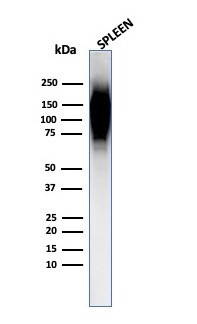



Western Blot Analysis of human spleen tissue lysate using HIF1 alpha Mouse Monoclonal Antibody (Ha111a).

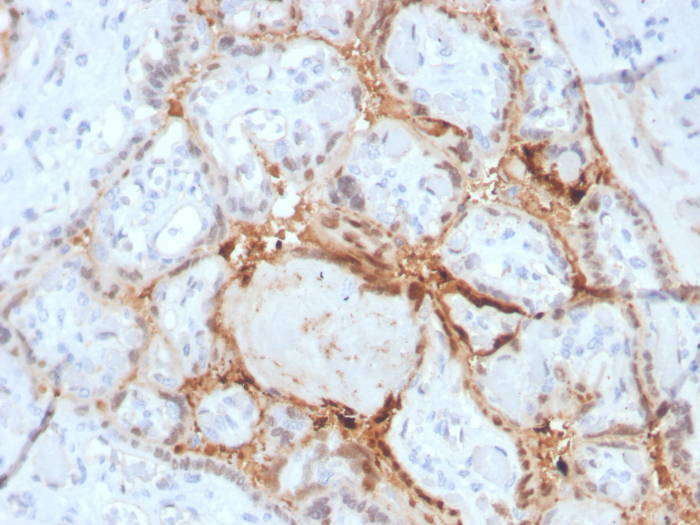
Formalin-fixed, paraffin-embedded human placenta stained with HIF1 alpha Mouse Monoclonal Antibody (Ha111a).

Formalin-fixed, paraffin-embedded human placenta stained with HIF1 alpha Mouse Monoclonal Antibody (Ha111a).

SDS-PAGE Analysis Purified HIF1 alpha Mouse Monoclonal Antibody (Ha111a). Confirmation of Purity and Integrity of Antibody.

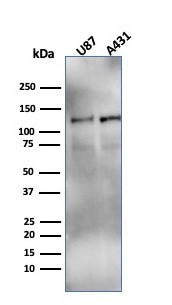
Western Blot Analysis of U87 and A431 cell lysate using HIF1 alpha Mouse Monoclonal Antibody (Ha111a).
Product Details
Synonyms
Positive Control
Known Applications & Suggested Dilutions
Immunogen
Cellular Localization
Species Reactivity
Host / Ig Isotype
Mol. Weight of Antigen
Specificity & Comments
HIF1 (hypoxia-inducible factor 1), a heterodimeric transcription factor complex central to cellular response to hypoxia, consists of two subunits (HIF-1 alpha and HIF-1 beta) which are basic helix-loop-helix proteins of the PAS (Per, ARNT, Sim) family. Expression of HIF-1 alpha protein is regulated by cellular oxygen level alterations as well as in oxygen-independent manner via different cytokines (through the PI3K-AKT-mTOR pathway), growth factors, oncogenic activation, or loss of tumor suppressor function etc. In normoxic cells, HIF-1 alpha is proline hydroxylated leading to a conformational change that promotes its binding to the VLH (von Hippel Lindau) protein E3 ligase complex; ubiquitination and followed by rapid proteasomal degradation. Hypoxia as well as chemical hydroxylase inhibitors (desferrioxamine, cobalt etc.) inhibit HIF-1 alpha degradation and lead to its accumulation in the cells, whereas, contrastingly, HIF-1 beta/ARNT (AhR nuclear translocator) remains stable under both conditions. Besides their critical role in hypoxic response, HIF1s regulates the transcription of genes responsible for angiogenesis, erythropoiesis/iron-metabolism, glucose metabolism, cell proliferation/survival, adipogenesis, carotid body formation, B lymphocyte development and immune reactions.
Key References
Bioinformatics


